
As an authorised service partner of Alfa Laval Hungary, our company has been dealing with industrial heat exchangers since its establishment. Our tasks include cleaning, refurbishing, repairing and advising plate heat exchangers to achieve higher performance and process optimisation.
Efficient heat transfer in a compact design
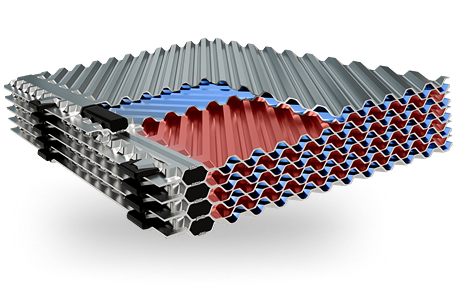
A plate heat exchanger is a modern, high-efficiency heat transfer device designed for the exchange of heat energy between liquids or gases. It is designed to provide a significant heat transfer surface area in a small footprint, making it an ideal choice for industrial applications, or even HVAC applications in office buildings, condominiums for media that are not too “chunky”.
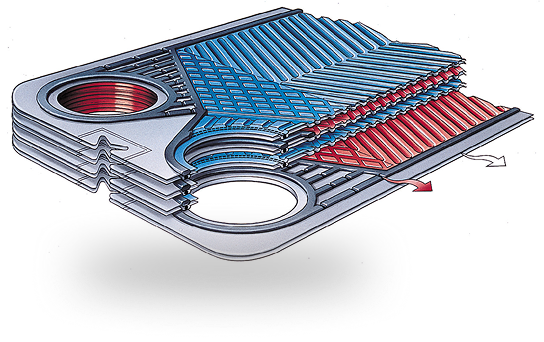
How does a plate heat exchanger work?
The plate heat exchanger consists of several thin, pressed metal plates, which are placed parallel to each other. The special pattern of the plates ensures turbulent flow, thereby increasing the heat transfer efficiency. In the heat exchanger, the two media (e.g. heating and cooling fluids) flow separately between the plates. Heat exchange takes place through the metal plates, from one medium to the other, without direct contact between them. This innovative design allows heat loss to be minimised and energy efficiency to be maximised.
Advantages of the plate heat exchanger
When is maintenance of the heat exchanger recommended?
At least once a year - as is standard industry practice - but more often if:
What to look out for before maintenance?
What are the signs that maintenance is needed?
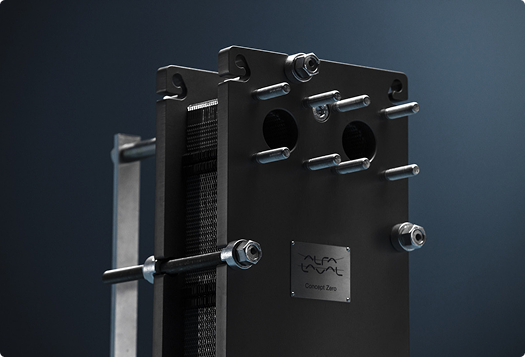
What does the maintenance of a heat exchanger look like?

VCA thermal camera inspection provides a quick, risk-free way to assess the condition of heat exchangers without unnecessary downtime and extra costs.
Alfa Grade Ltd. provides a full service of plate heat exchangers for its customers.

We undertake full heat exchanger maintenance, whether it is a one-off order or a long-term cooperation based on a framework contract. The aim of our services is to ensure that our partners' heat exchangers operate reliably, with the highest possible efficiency and the lowest possible operating costs.
Please contact us if you: